Frankfurt School Logo

Analytics & Big Data

Session 11: Integration and exam preparation

Prof. Dr. Gerit Wagner

(2026-05-11)

Agenda


  • Synthesis and reflection
  • Course evaluations
  • Test exam
  • Q&A

Synthesis and reflection

Synthesis

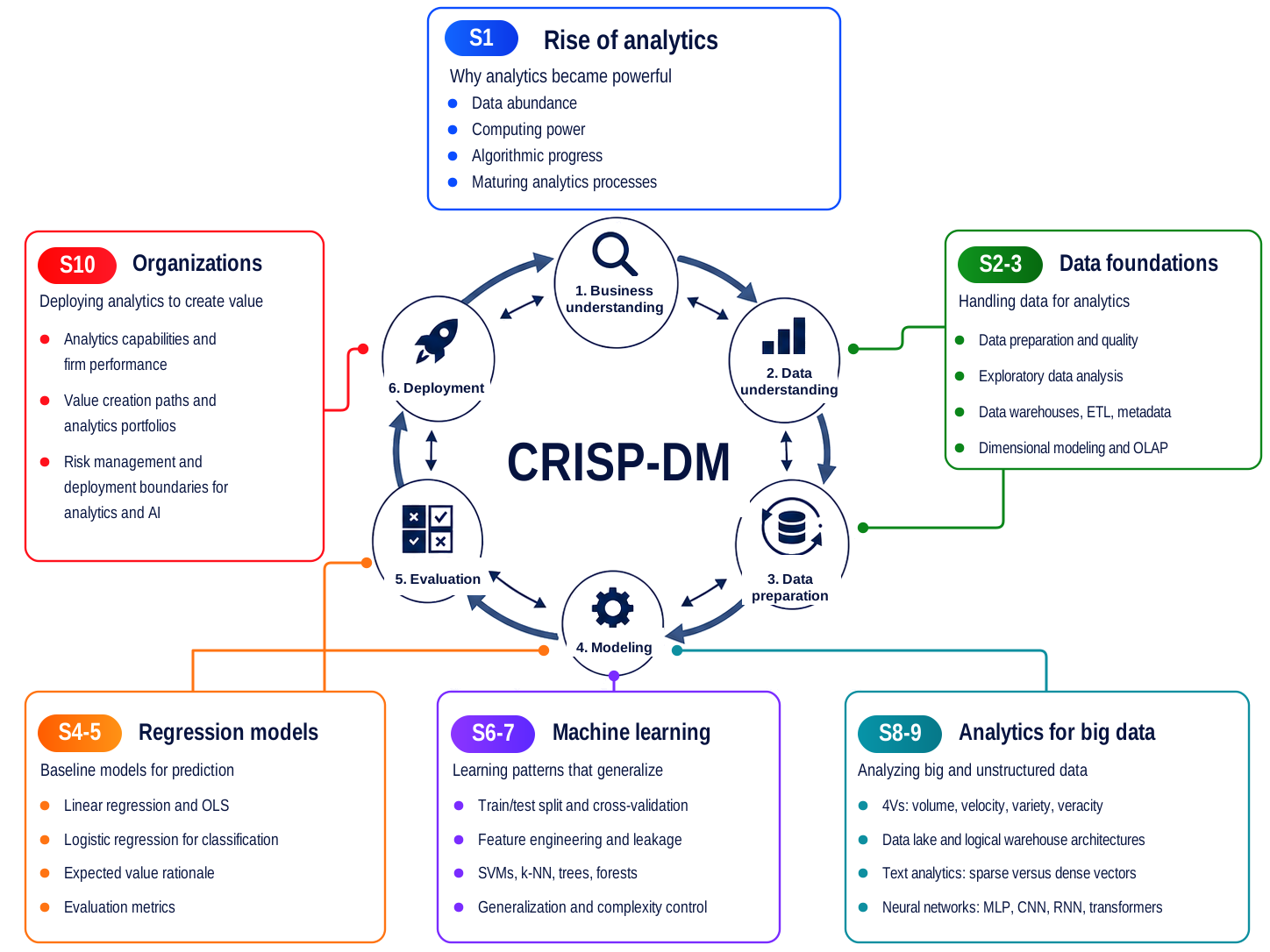
Course overview around CRISP-DM Editable SVG callout boxes and connector lines with the original CRISP-DM cycle vectorized from the source image. CRISP-DM 1. Business understanding 2. Data understanding 3. Data preparation 4. Modeling 5. Evaluation 6. Deployment S1Rise of analyticsWhy analytics became powerfulData abundanceComputing powerAlgorithmic progressMaturing analytics processes S10OrganizationsDeploying analytics to create valueAnalytics capabilities andfirm performanceValue creation paths andanalytics portfoliosRisk management anddeployment boundaries foranalytics and AI S2-3Data foundationsHandling data for analyticsData preparation and qualityExploratory data analysisData warehouses, ETL, metadataDimensional modeling and OLAP S4-5Regression modelsBaseline models for predictionLinear regression and OLSLogistic regression for classificationExpected value rationaleEvaluation metrics S6-7Machine learningLearning patterns that generalizeTrain/test split and cross-validationFeature engineering and leakageSVMs, k-NN, trees, forestsGeneralization and complexity control S8-9Analytics for big dataAnalyzing big and unstructured data4Vs: volume, velocity, variety, veracityData lake and logical warehouse architecturesText analytics: sparse versus dense vectorsNeural networks: MLP, CNN, RNN, transformers

Reflection


Based on the overview figure, reflect on the course as a whole:

  1. Where did you learn the most?
    Which part of the course overview represents the largest learning gain for you?

  2. What was most interesting?
    Which topic, method, or application would you like to explore further?

  3. What did you already know?
    Which concepts, tools, or perspectives were familiar to you before the course?

  4. Where do you still feel uncertain?
    Which part of the overview would you find hardest to explain to someone else?

  5. Where do you see the biggest gaps in the contents?
    Which topics should be extended, deepened, or added in a future version of the course?
Course evaluations

Course evaluations

Your feedback helps improve the course, materials, and learning experience.

  • Please take 10 minutes to complete the evaluation.
  • Your feedback is anonymous. Please be specific, honest, and constructive.

Where to find the evaluation

  • In the email link you received
  • In Canvas as a pop-up
  • In the Canvas course menu: Course Evaluation

Thank you for taking the time to participate!

Test exam

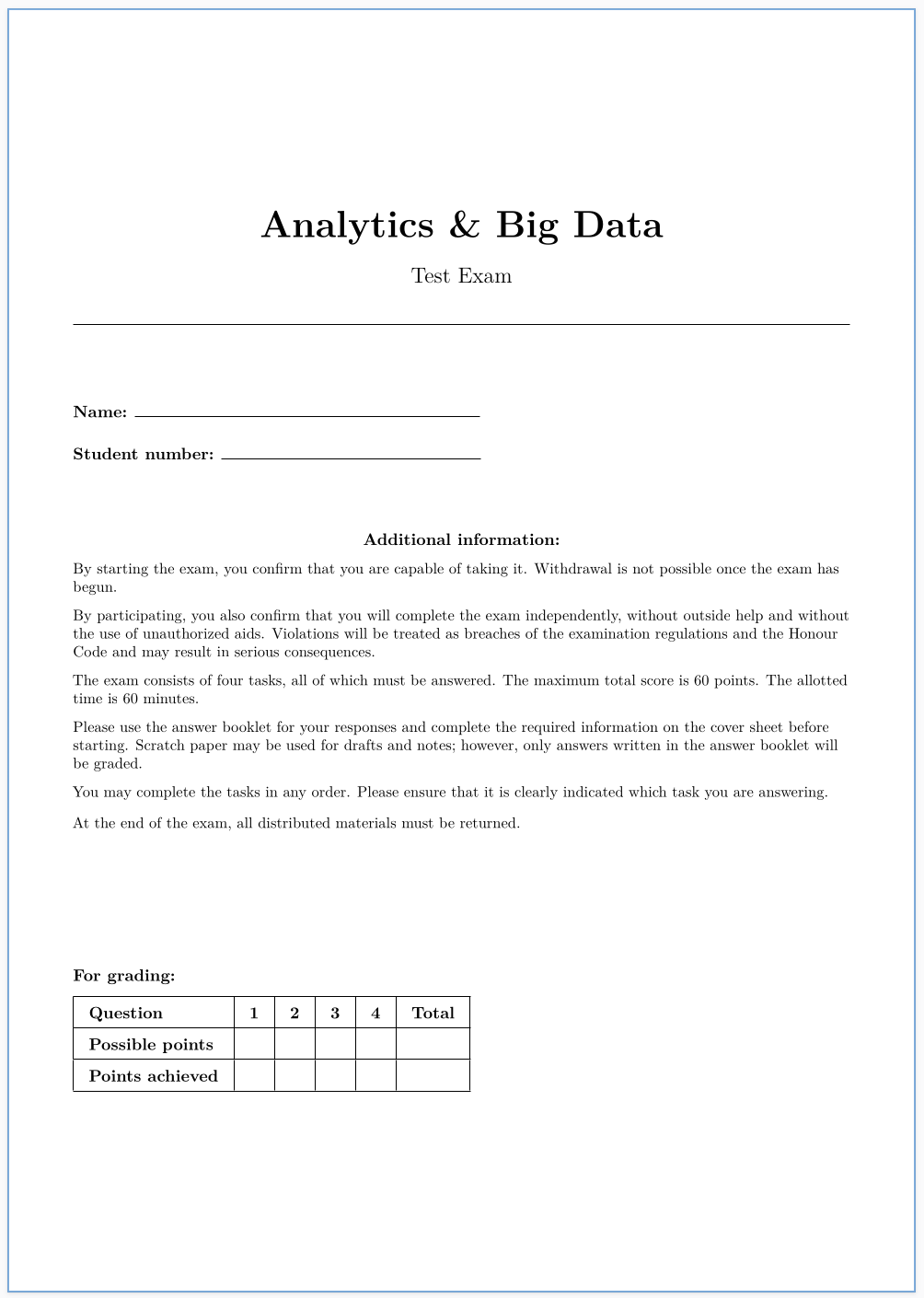
Test exam

Available for download here.

Q&A

Questions

Anonymous 2320d (2026-05-04, 4:41pm)

  • How will the exam be structured? Free text and multiple choice?
  • How will the points be distributed?
  • Will the exam mainly focus on the key takeaways from the slides and the key concepts? Is edge knowledge from the slides required?

Good luck with the exam!


You are well-prepared if you can explain the main ideas, connect them across sessions, and apply them to concrete examples.


Before the exam

  • Revisit the course overview
  • Review key concepts and takeaways
  • Practice with the test exam
  • Focus on understanding, not memorization

Stay in touch

  • Course materials
    Canvas course page

  • Interested in a thesis topic?
    Bachelor and master theses (see SuSy)

  • Questions after the course?
    Send me an email or book a meeting


Good luck — and thank you for participating in the course!