Align data structures with the specific review type (Curate)
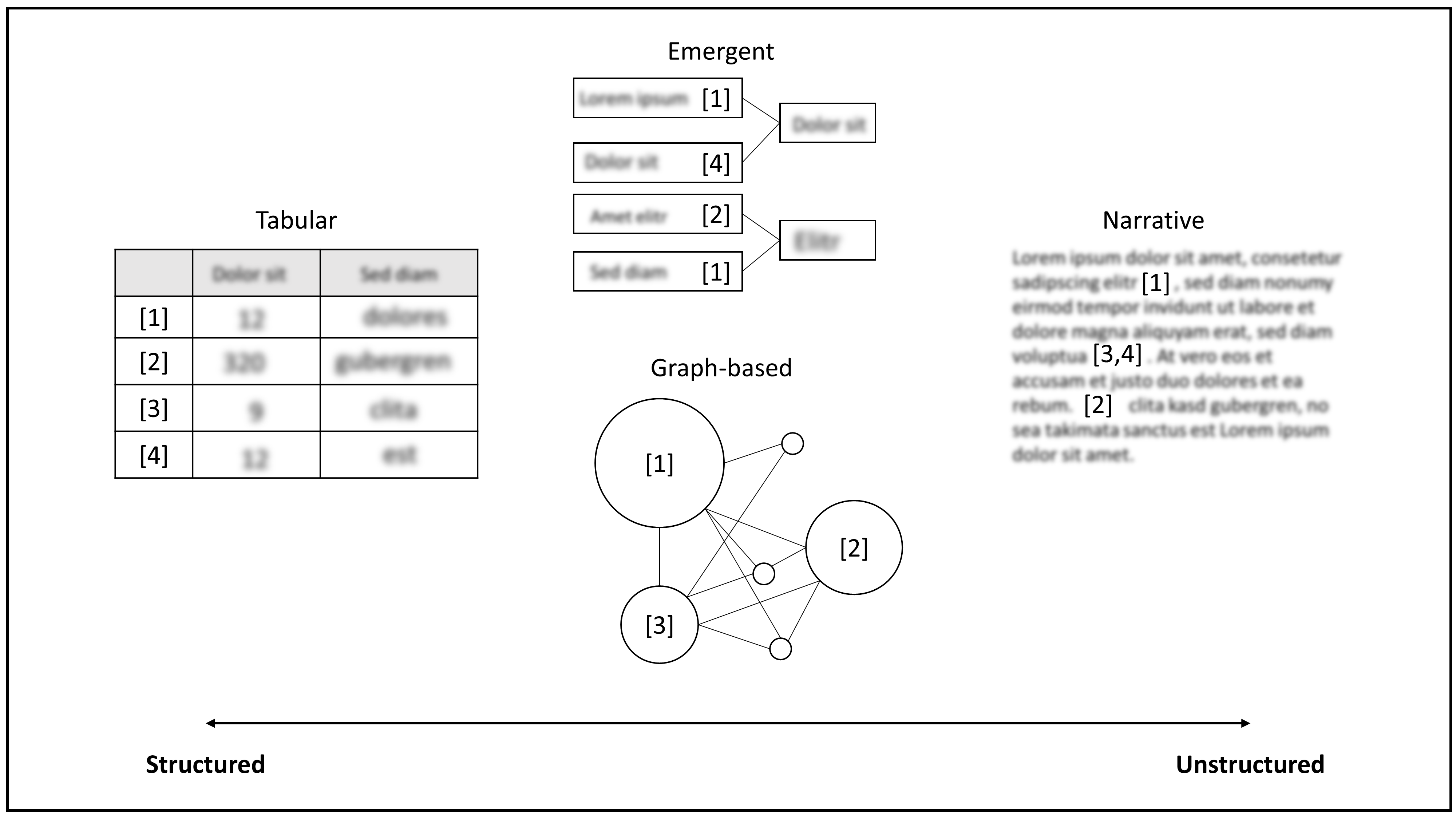
Select data structures and representations that fit the type of review and the intended analytical method.
Why this matters
- Methodological coherence: Different review types (systematic, scoping, bibliometric, qualitative synthesis) require different kinds and levels of structure.
- Analytical efficiency: Well-aligned data structures make analyses possible without excessive transformation or ad-hoc workarounds.
- Transparency and reuse: When data reflects the logic of the method, others can more easily understand, reproduce, and extend the analysis.
Practical implementation
- Choose the degree of structure in line with the review objective and method.
- Align extraction fields and schemata with planned analyses, e.g., variables for quantitative synthesis; concepts/mechanisms for qualitative synthesis.
- Make methodological assumptions explicit by encoding them directly in the data model.
- Revisit and adapt data structures if the review design evolves (e.g., from mapping to synthesis).
References
Wang, Blair. 2022. “Programming for Qualitative Data Analysis: Towards a YAML Workflow.” In Australasian Conference on Information Systems.